RE: “Adopt Don’t Shop” — Why This Viral Slogan Hurts Families, Dogs, and the System

Updated: Nov 26, 2025
By Emilie Campbell, BSN-RN — Ethical Breeder, Pack Leader
Campbell’s Family Dobermans
Editorial Support: Cassie Higgins, Voice Architect, Discovery Loft
Every time a breeder posts a litter, shares a puppy update, or talks about intentional lineage…
The internet rushes in with the same tired moral mic drop:
“Adopt, don’t shop.”
It sounds noble.
It feels virtuous.
And it’s wildly disconnected from how dogs — and families — actually function in the real world.
As someone who:
raises and evaluates working-line Dobermans
rehabilitates dogs returned from poor placements
retrains dogs from shelters with behavioral red flags
works with families who are drowning in issues they were never prepared for
…I’m not here to dismiss adoption or blindly defend breeders.
I’m here to say the quiet part out loud:
The dogs in shelters are not there because ethical breeders exist.
They’re there because training, structure, and responsible placement are failing across the entire dog world.
And pretending otherwise is hurting dogs.
1. Adoption Isn’t the Best Fit for Every Home — and Saying Otherwise Is Irresponsible

If you have:
small children
multiple pets
a working-dog need (protection, livestock, task-work)
a vulnerable family member (elderly, disabled, immunocompromised, trauma history)
a requirement for highly stable temperament
a lifestyle that demands specific traits (drive, energy, sensitivity, recovery)
…then “just adopt” is not safe or responsible advice.
Some families truly need:
predictable genetics
stable temperament
known health history
proper early socialization
a dog raised with boundaries from day one
a breed that matches their actual life (not their fantasy)
hormonal development that wasn’t disrupted by extremely early spay/neuter
A livestock guardian doesn’t come from a city shelter.
A serious working dog doesn’t come from an overwhelmed rescue.
A safe, stable companion for small kids should not be a gamble.
Upbringing matters.
Temperament matters.
Placement matters.
Slogans don’t.
2. Why Dogs REALLY End Up in Shelters (Spoiler: It’s Not Because of Ethical Breeders)
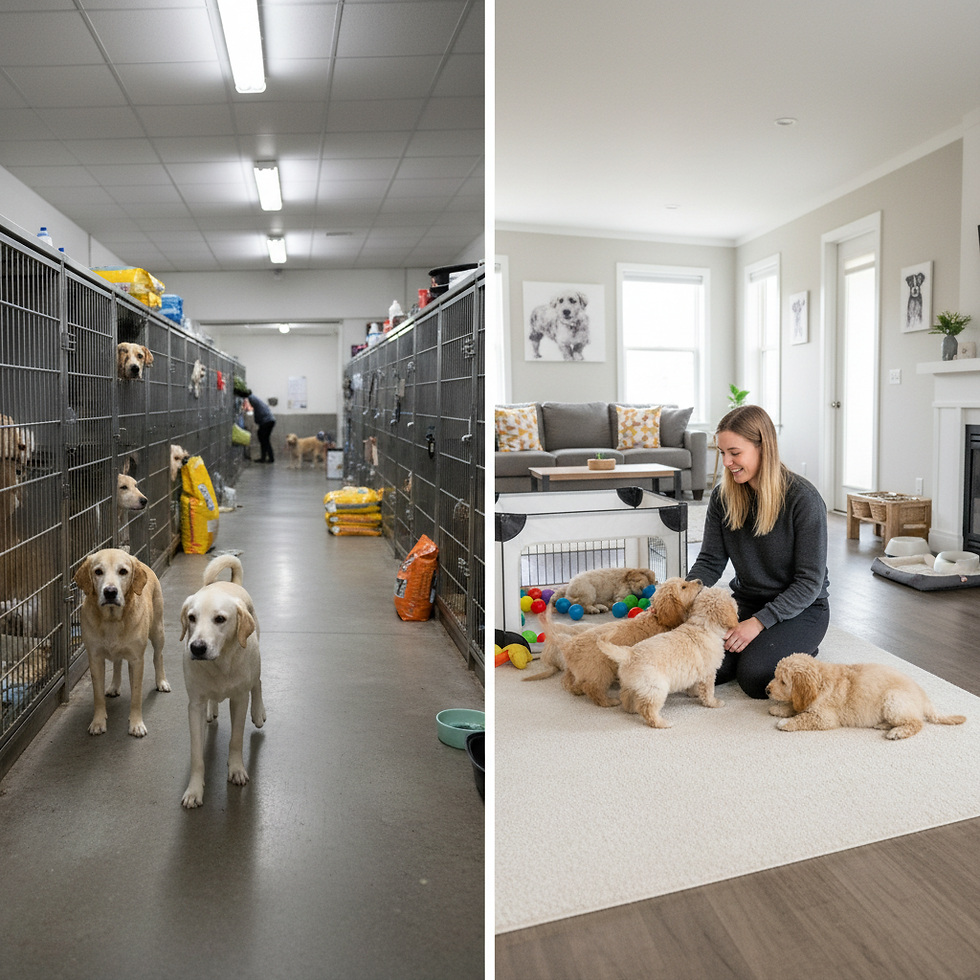
The myth:
“Shelters are full because breeders exist.”
The reality:
Dogs land in shelters because somewhere along the way, they didn’t get what they needed to succeed.
The most common reasons dogs end up surrendered:
no training
no structure
no boundaries
high drive in low-capacity homes
reactivity that was never addressed
unresolved trauma
temperament mismatches
puppies pulled from litters too early
placements made for emotion, not fit
backyard breeders and unprepared owners in way over their heads
Nine times out of ten, the core issue is behavioral.
And behavioral issues almost always trace back to upbringing and environment, not just breed.
This is where both shelters and irresponsible breeders come in.
A. How Shelters Contribute to the Crisis (the Part People Avoid)
Shelters are not magical, morally superior institutions.
Most are operating in survival mode, not development mode.

They often have:
rotating volunteers with varying skill levels
minimal behavioral education
overwhelming intake
no individualized development plans
rigid, one-size-fits-all protocols
deeply ingrained anti-breeder bias that blocks collaboration with ethical programs
Because they’re drowning, shelters frequently:
push dogs into homes prematurely
skip or rush temperament assessment
place dogs in homes without training support
rely on emotional marketing instead of a structured behavior program
enforce early spay/neuter as blanket policy — not based on that dog’s biology
offer no real follow-up to help families navigate issues
That last part matters.
Early spay/neuter can contribute to:
hormonal instability
reactivity
poor joint and ligament development
fear-based aggression
poor stress recovery
long-term behavioral volatility
These aren’t “bad people.”
They are people working inside a system built for triage, not for raising stable, confident family dogs.
But we cannot pretend that “adopt” is automatically the safest or most ethical choice.
B. How Irresponsible Breeders Fuel the Same Fire
On the breeder side, we see a different set of problems:
people jumping into breeding with zero experience
“quick tip” DMs to ethical breeders asking how to run a kennel
pairings repeated from unstable or poorly placed litters
puppies removed from their mother and litter far too early
lack of socialization
no real screening of families
no education for owners
litters bred purely for cash, not for stability or temperament
Early removal from mom and pack is a massive issue.
Puppies learn:
bite inhibition
emotional regulation
canine communication
social cues
pack dynamics
impulse control
…from their mother and siblings — not from humans.
When dogs are:
underdeveloped
misunderstood
bred from unstable lines
then handed to unprepared families
…you get exactly the kind of behavior shelters are not equipped to rehabilitate.
Again: this is not caused by ethical, responsible breeders stewarding health and temperament over generations.
It’s caused by people breeding without standards.
C. What We Actually Have: A Two-Part Industry Failure
This isn’t:
“good rescues vs bad breeders”
or “good adopters vs selfish buyers.”
It’s an industry-wide systems failure built on:
low minimum standards
high emotional pressure
bad incentives (move dogs, move litters, keep donations coming)
no unified education on dog behavior
inconsistent temperament testing
no shared language around what “ready for a home” actually means
almost no accountability, on either side, for outcomes
And the ones paying for it are:
The dogs.
And the families who genuinely tried to do the right thing.
3. When “Adopt Don’t Shop” Actively Hurts Dogs (and Families)
When families follow a slogan instead of a thoughtful process, dogs get placed into environments where they simply can’t thrive.

I’ve personally worked with families who adopted dogs that:
had bite histories
were aggressive with other dogs
escalated quickly during play
guarded food, toys, and even people
reacted to children or visitors
had early spay/neuter fallout
were carrying layers of trauma that were never addressed
These families weren’t bad homes.
They were misled homes.
They were told:
“He just needs love.”
“She just needs time.”
“If you’re committed, it’ll all work out.”
Love and commitment matter.
But they are not substitutes for structure, training, rehab, or intentional placement.
And the dogs?
They were set up to fail — again.
That’s not rescue.
That’s recycling trauma.
4. What Ethical Breeders Do That Shelters Currently Can’t
Here’s what responsible breeders are actually doing behind the scenes:

Ethical breeders:
steward temperament over generations
track lineage and health testing
start training and boundaries from birth
watch how puppies respond to pressure, novelty, and feedback
match puppies to compatible homes instead of “first come, first serve”
educate families before, during, and after placement
understand hormonal development and adjust timelines accordingly
provide lifetime support and guidance
take dogs back at any age if something goes wrong
rehabilitate returned dogs instead of sending them down the line
This isn’t “shopping for a product.”
This is canine stewardship — intentional, committed, and accountable.
And it protects:
children
other animals in the home
the humans who are trying to do right
and the dog, who never asked to be in the middle of human chaos in the first place.
5. The Real Gap: Skill, Structure, and Training

If shelters:
invested in certified trainers,
created behavior plans,
standardized temperament evaluations,
and stabilized dogs before pushing them out the door…
…and if breeders:
stopped cutting corners,
stopped breeding from unstable dogs,
stopped removing puppies too early,
and started educating families properly…
We would see fewer dogs in shelters.
Fewer returns.
Fewer bites.
Fewer “problem dogs” who are really just “poorly set-up dogs.”
What’s missing isn’t “more slogans.”
It’s more skill. More structure. More training.
6. So What Should We Be Saying Instead of “Adopt Don’t Shop”?

Something honest:
“Choose responsibly, not reactively.”
“Know your needs — then choose the right source.”
“A matched dog is a safe dog.”
Adoption is beautiful — when the fit is right, and the support is there.
Working with an ethical breeder is beautiful — when standards are high and support is lifelong.
Not all dogs come from shelters.
Not all dogs should.
Not all breeders are the problem.
Not all shelters are the solution.
Families deserve clarity.
Dogs deserve stability.
The conversation deserves more than a hashtag.
Final Thought
I’m not trying to win an argument on the internet.
I’m trying to protect dogs — and the people who love them.
Adopt if it’s right for you.
Work with an ethical breeder if that’s what your family truly needs.
But please:
Stop shaming families for choosing safety, predictability, and compatibility
when they’re bringing a living, feeling being into their home.
Every dog deserves to belong.
Every family deserves the right match.
And every conversation about dogs deserves more wisdom than a slogan.
— Emilie
Campbell’s Family Dobermans
Dogs raised with intention, integrity, and respect.


Spot on! What a great topic Emily. You hit every every nail on the head! You are an AMAZING breeder, and anyone that is lucky enough to be chosen as one of your puppies “forever home” knows that they are getting the best of the best because of YOU!